A Case For Sovereign Data

The AI era promises a leap in personalization, creativity, and capability. But realizing that promise requires rethinking the foundation it rests on. For decades, personal data has been treated as an invisible resource, collected and monetized by platforms that deliver convenience while capturing most of the value. Each day, billions of signals such as preferences, behaviors, relationships, and expertise flow into systems that define what we see, buy, and believe. These models have driven extraordinary progress, yet they remain limited by a simple flaw: the people generating the intelligence are rarely participants in its value.
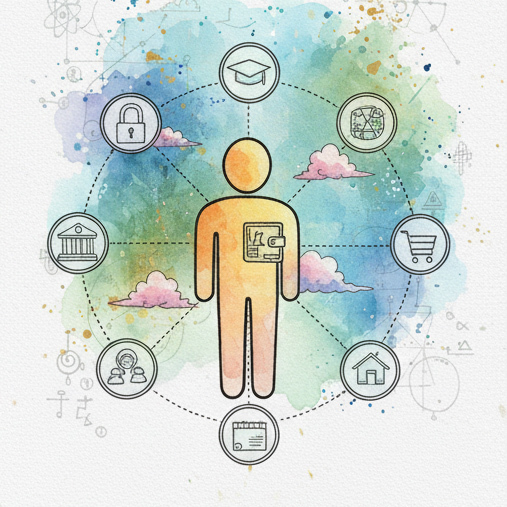
Sovereign data offers a better way forward. It is the principle that individuals should own, control, and benefit from their digital information, turning data from a passive input into an active asset. When people hold the keys to their data, secured by cryptographic ownership and portable identity, they can decide when and how AI systems learn from their context. This shift transforms users into collaborators. Imagine healthcare AI that can safely combine your medical history, lifestyle data, and genetic profile—with your permission—to deliver precision insights without ever surrendering your privacy. The building blocks already exist in encrypted computation, zero-knowledge proofs, and decentralized identity frameworks. What is needed now is alignment: technology, policy, and culture moving together toward shared agency.
The economic potential of sovereign data is equally transformative. When individuals control and contribute their data with consent, new forms of participation emerge. Data collectives can negotiate shared value. Personal AI agents can manage assets on your behalf. Knowledge economies can reward verified expertise. History shows that clear ownership systems unlock new industries. The establishment of property rights once fueled industrial and agricultural revolutions. Data sovereignty can do the same for the intelligence revolution, shifting value creation from intermediaries to individuals.
Achieving this future requires coordination rather than confrontation. Technologists are designing interoperable standards that bridge ecosystems instead of replacing them. Regulators are beginning to explore frameworks that extend beyond privacy protection toward genuine data rights. And people everywhere are starting to recognize that their digital footprint is not just personal; it is powerful.
Sovereign data is not about rejecting technology. It is about aligning technology with human intent. By giving people control over how their information is used, we create a more trusted, transparent, and innovative foundation for AI. This is the path toward an intelligence economy where participation is voluntary, benefit is shared, and progress amplifies human agency rather than eroding it.