Identity at the Center
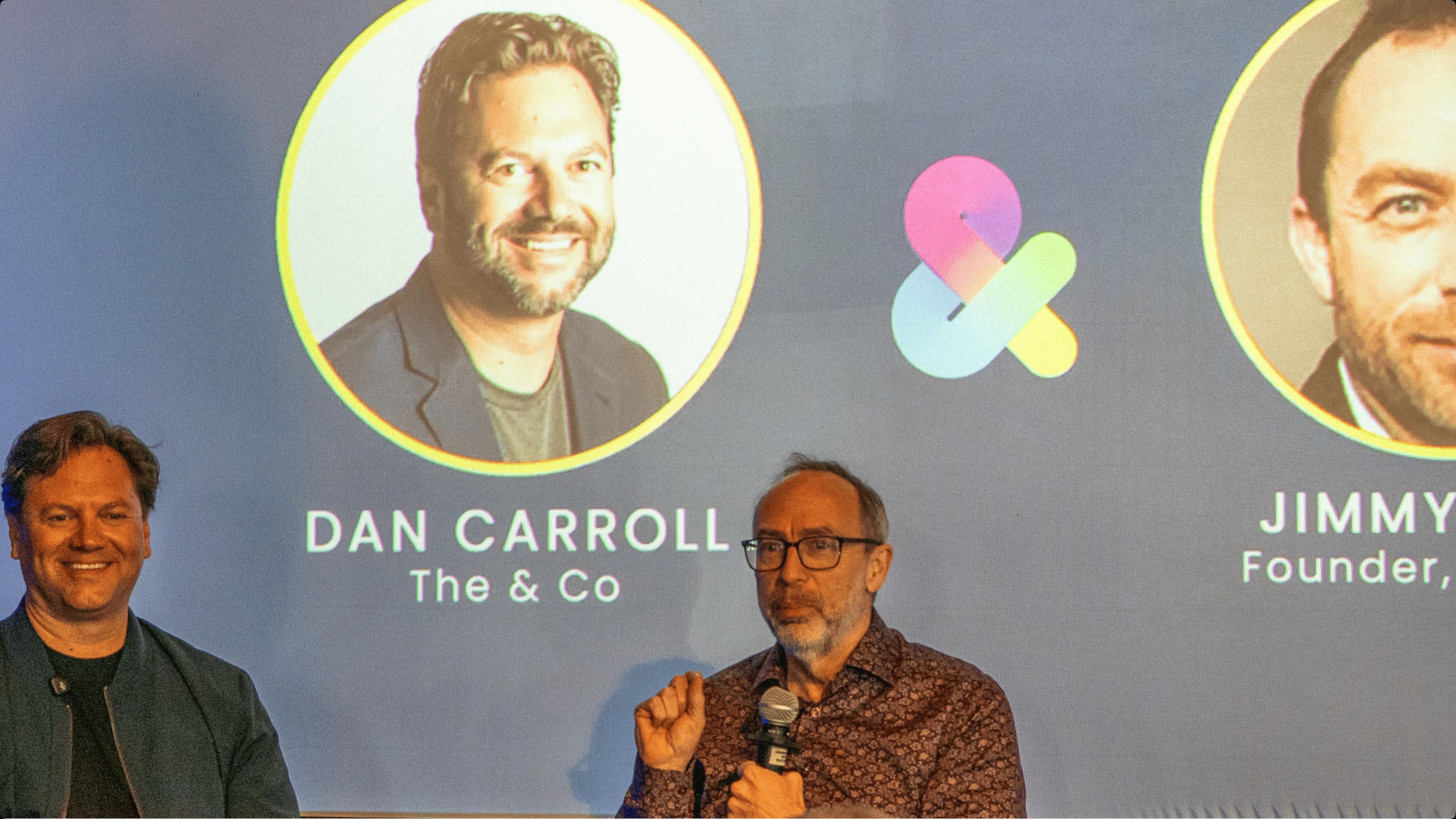
Written by Dan Carroll
The internet was built to empower the individual — to advance inquiry, to let anyone reach anyone, and to make collective action possible at a new scale. As the network matured, its activity concentrated in a small number of intermediaries, and the person who was meant to be its center was moved to its edge. A new phase is now beginning. Intelligent services increasingly act on a person’s behalf, and for the first time in a generation it has become both possible and necessary to put the person back at the center. Doing so requires one missing piece: a persistent, person-owned identity.
We don’t have a privacy problem. We have a choice problem.
Every app, service and device that runs part of your life asks the same question: Accept or decline? Accept, and you hand over far more than the task requires. Decline, and you go without. There is no third option.
We call this consent. It isn’t. A choice between surrendering everything and using nothing is a toll, not a decision.
The evidence suggests people know this. Researchers estimated that reading every privacy policy the average person encounters would take about 76 working days a year.1 Nobody does it, and not because they don’t care. Studies of what scholars call digital resignation2 find that most people do care about their data. They just believe they have no real power over it. Clicking “Accept” isn’t apathy. It’s a rational response to a rigged menu.
When people lose control over a situation for long enough, they stop trying to take it back. That’s the quiet cost of thirty years of all-or-nothing technology: not just the data we’ve given away, but the agency we’ve stopped expecting to have.
It’s about to get worse
Until now, a person started every data exchange. You filled in the form. You clicked the button. However flawed the choice, you were the one making it.
That is changing. Intelligent agents now book, buy, schedule and apply on our behalf. They will request and share personal data thousands of times, at machine speed, with services we never see. If the only remaining options are to accept all or use nothing, agents will simply accept all, for us, at scale.
The binary choice was a frustration when people faced it. When agents face it, it becomes a system.
Asking a better question
Most efforts to fix this ask: How do we protect people’s data? The answer is usually more rules, more pop-ups and more policies, which return us to the same accept-or-decline screen.
We think that’s the wrong question. The better one is: Who decides?
If the person decides, protection follows. To decide, a person needs something we’ve never given them: one persistent identity that belongs to them, not to any app or platform. Every data exchange must pass through this identity to ensure it represents the decision of the person. That identity has to answer three questions every time data moves:
- Who is this?
- What may be shared?
- With which experience?
That identity is the &tag. The &® Company exists to give one to every person, and to make it the place from which each of us decides how we meet the world.
Rethinking the default
The internet was built to put individuals at the center: to let anyone reach anyone, ask anything and act together. Somewhere along the way, the person moved to the edge, and “Accept” became the price of participation.
We have a rare window to change the default before agents lock in the old one. The question isn’t whether intelligent services will act on our behalf. They will. The question is whether they’ll act on our terms.
We believe they should. That’s why identity belongs at the center, and why the person belongs at the center of identity.
When identity sits at the center
Most of us think of identity as a gate: something you prove at the door, again and again. When identity lives with the person, it stops being a gate and becomes a key that works everywhere.
That key unlocks three things.
Auto Login: the only login that works when no one is at the keyboard
Picture arriving somewhere and simply being known. No password, no code, no sign-up form, no consent screen to clear. The &tag establishes that you are a real, unique human. The &® presents what the experience needs under the rules you’ve already set. The experience opens ready to serve you.
In yesterday’s internet, that would have been a convenience. In an agentic one, it’s a necessity. Most interactions are now headless: there’s no person at the keyboard to tap through a login. Our current tools weren’t built for that. Passwords and passkeys prove you control one account at one site, and they don’t travel. Platform sign-in is granted app by app and owned by the platform, which decides who gets in. Only an identity that lives with the person, and travels with their agent, can confirm who you are and apply what you’ve already authorized when no one is there to click.
Auto Login isn’t a nicer login. It’s the only one that works when you’re not in the room.
Trusted Experiences: the answer moves, not the data
Getting through the door is half the problem. The other half is what the experience learns once you’re inside.
Today we handle that on faith. We accept terms of service no one reads, cookies leak our activity across the web, and we hand over our data hoping it will be honored. A Trusted Experience flips the arrangement. Data is requested by, and shared with, a single experience only, and the person holds the scope.
Here’s the counterintuitive part. The strongest privacy promise isn’t “we’ll forget your data.” Any app can say that. The strongest promise is “we never received it.” Because the &® answers each experience separately, the underlying data never leaves the person. The answer moves, not the data. A community can ask what its members have in common and get one good answer, computed across their devices, without collecting anyone’s signals.
Consent keeps pace with agents, too. Every request is checked against the person’s rules, and the person is pulled in only for sensitive asks. The result is zero-party data: shared deliberately, scoped narrowly, with a proven human making the decision. The permission lives with the individual, not buried in a policy.
Auto Login gets the person, or their agent, through the door already recognized. Trusted Experiences decide what the experience may learn once they’re inside. Neither is possible while a platform sits in the middle.
Networked Permissions: decide once, honored everywhere
Today, permission is granted one screen at a time and forgotten the moment it’s given. Every new app, site and device starts from zero, so people make the same decision hundreds of times and almost never get to revisit it.
Networked Permissions turn that around. A person may choose to set their rules once, and those standing rules travel with their &® to every experience, every agent acting on their behalf and every community they join. Change your mind, and the change applies everywhere at once. Revoke a permission, and it’s revoked at the source, not site by site.
Permissions also run between people, not just from people to services. Two &s can form a direct relationship, with secure storage owned by both parties rather than by a platform between them. A community can pool understanding across many &®s, each one contributing only under its own rules. The network is made of people who have agreed to what they share, not of data collected about them.
What changes: the friction disappears
The experiences we already have get lighter. Sign-up and onboarding collapse into simply arriving, with only the steps an experience truly needs. An agent checking out or booking a trip stops re-entering a card and address at every site; it makes one request to the &®, and the person approves only what’s sensitive. Customer support recognizes you on arrival, with the right context, instead of making you prove who you are and repeat your history. Joining a community requires no lists, badges or codes at the door. Personalization is asked for directly and answered privately, instead of inferred from tracking.
What becomes possible: experiences that couldn’t exist before
More interesting still are the experiences the platform-owned world could never support. Two people, or a person and a community, can discover what they share without either revealing a profile. A community can genuinely understand its members, with insight pooled across many &s and useful to everyone, without any member surrendering their data. That may be how the most engaged networks finally learn more from members who would never simply hand their information over. An artist’s experience can know what each fan loves, for that experience only. And the same identity can travel to any screen, any wearable, any physical place, and be recognized without setup.
We tend to assume privacy and personalization are a trade-off: to be known, you have to be exposed. These experiences suggest the opposite. They aren’t better versions of old experiences. They’re new ones, and they exist only when identity sits at the center.
The economics
Most business models carry a quiet trade-off: the more a company earns, the more it needs to take from you. A system built on agency has to break that pattern, or the pattern will eventually break its promise.
Here’s how the &® breaks it. Each &answer earns about one cent, paid by the platform, business or agent that asked the question, never by the person. People own; businesses pay.
A cent sounds trivial. It isn’t, because identity is touched by almost everything: every agent request, every login, every Trusted Experience. This is a business of volume, not extraction. Revenue grows with the activity of intelligent services, not with ad impressions or subscriptions, so there’s no reason to keep you scrolling, hold your attention or lock you in.
And the money comes from answering a question, never from selling the data behind the answer. That’s the part that matters most. In most networks, what makes them valuable and what makes them trustworthy pull in opposite directions. Here they’re one and the same: the network earns only when people trust it enough to let it answer.
A growth engine
There’s a catch in any business built on pennies: pennies need volume, and volume takes years to build. A network can’t wait on its own transaction revenue to pay for the work of becoming recognized everywhere. So the &® funds that early work another way, through a marketplace for the &tags themselves.
Every &® begins with a one-time purchase that the person owns for life. Most tags are free and open to anyone claiming an identity. But some names are scarce: the short ones, the memorable ones, the ones that carry a brand. Scarcity has value, as anyone who has tried to buy a good domain name knows. A premium tag, one that’s short or especially memorable, runs from fifty dollars into the high hundreds. An ultra-premium tag, the kind a brand, creator or community claims to secure its own name, ranges from one thousand to twenty-five thousand dollars.
What makes this more than a sale is the loop it sets in motion, a loop that gets stronger each time it turns. Premium sales bring in capital. That capital goes into adoption: communities, partners, and recognition by agents and services. Wider recognition means more places accept &tags. More acceptance means more &answers, and more pennies. Early on, the tags fund the network. Over time, the network’s answers carry it.
References
- Aleecia M. McDonald and Lorrie Faith Cranor, “The Cost of Reading Privacy Policies”, I/S: A Journal of Law and Policy for the Information Society 4, no. 3 (2008): 543–568.
- Nora A. Draper and Joseph Turow, “The corporate cultivation of digital resignation”, New Media & Society 21, no. 8 (2019): 1824–1839.