Jimmy Wales on Trust, Wikipedia, and Building for Humanity
Written by SXSW Transcript
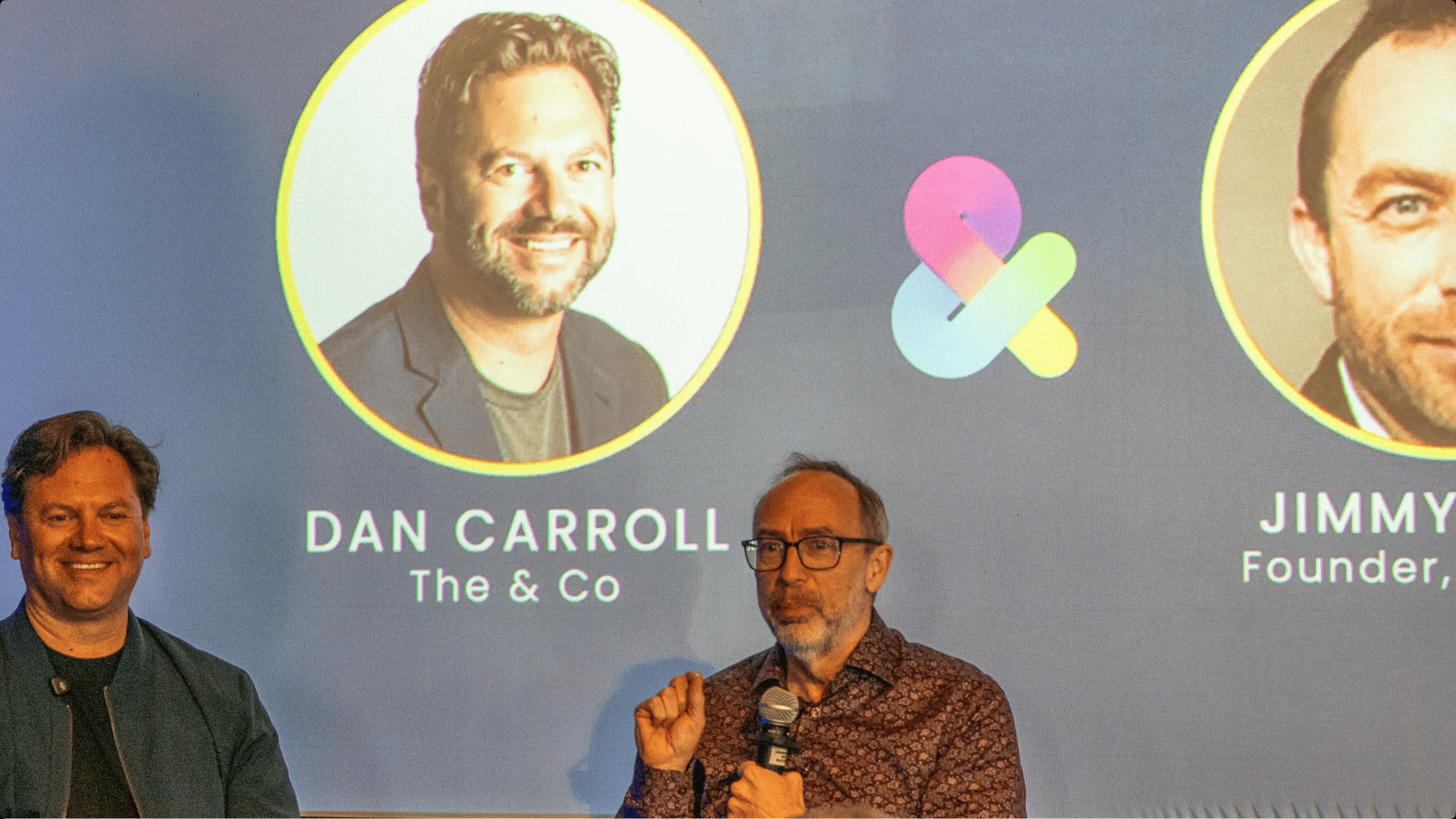
At SXSW 2026, &® Company co-founder Dan Carroll sat down with Jimmy Wales—entrepreneur, Wikipedia founder, and author—for a fireside chat on trust, technology, and what it means to build systems that genuinely serve people.
Wales is best known for founding Wikipedia and co-founding the Wikimedia Foundation, which turned the idea of a volunteer-built, openly governed knowledge base into one of the most visited and trusted websites on the internet. He has spent more than two decades thinking about what makes institutions trustworthy, what tears them apart, and what entrepreneurs can do differently.
Their conversation touched on the mechanics of social media toxicity, how Airbnb almost destroyed itself and then didn't, what Quaker merchants knew about business, and why Wales remains an optimist about humanity.
Staying Optimistic
Dan Carroll: You've described yourself as an optimist, which feels countercultural right now. What keeps you optimistic?
Jimmy Wales: For me, it's still the Wikipedia community—all the little details that generally aren't noticed by anyone outside of Wikipedia. People just very passionately get on with their work, making something useful for everyone. I was just in Kerala, India, and I met with the local Wikipedia group. They were full of energy, excited about the projects they were working on, partnering with local schools and libraries. This is all kind of under the radar. You see all the big news of the world, but there are so many great people doing great things.
The theme for Wikipedia's twenty-fifth anniversary is "knowledge is human." You can really see where that comes from.
Why Trust Is the Word of 2026
DC: The word of 2026 is apparently "trust." Why now?
JW: The Edelman Trust Barometer has been tracking this for years, and we've seen an enormous decline in trust over the last twenty-five years—trust in journalism, in politics, in institutions of all kinds, in each other.
It's become much more acute as we have a transparently untrustworthy political climate. One of the problems is that when voters go to vote, the fact that someone isn't trustworthy doesn't seem to persuade them, because they've decided that everyone is a crook. But that's wrong. And I think we're starting to get some blowback—people saying, "Actually, we need trustworthy institutions. We need to remember trust in each other."
The Triangle of Trust—and Where We've Fallen Furthest
DC: You discuss a "triangle of trust"—authenticity, empathy, and logic. Which leg is wobbling most right now?
JW: Empathy, for me, is the one that's most meaningful right now. The framework itself comes from Frances Frei at Harvard, and a lot of trust researchers land on those three elements in one form or another. But empathy is where I think we've fallen furthest.
There is a feeling—and social media makes it much worse—that the people who disagree with you are just horrific human beings. We all know that's probably not true. Take Brexit. All the major political parties were opposed, and yet it passed. A lot of the mainstream rhetoric framed people who supported Brexit as racists who hated foreigners. But if you actually talked to them and listened, yes, some of them were—but a lot of them were people in outlying parts of the UK saying: my kids don't have a future here. There are no jobs. The industry I worked in has died. That lack of empathy, that assumption of the worst motive, is what prevented any real conversation from happening.
The Algorithm Problem
DC: Wikipedia was essentially designed around compromise. But trust feels slow, and AI is moving fast. How do you think about that tension?
JW: Social media toxicity is a real part of what's going on. But I think the issue is more specific than "social media is bad." Think about what I'd call the racist uncle problem. In normal life, your racist uncle makes a few obnoxious comments at Christmas dinner and two people at the pub listen to him. But on social media, he posts something, and everyone piles on to say how wrong he is—and the algorithm sees all that engagement and promotes it. Meanwhile, your sweet grandmother posts something genuinely nice, nobody fights about it, and the algorithm buries it.
That's not a top-down problem you solve by banning things. It's a structural problem with what the algorithm is optimizing for.
People sometimes say, "You couldn't build Wikipedia today—everything's gotten too bad." I push back on that. I grew up with Usenet, which was a largely unmoderated message board with no algorithms at all—and people were absolutely horrible to each other. We don't need algorithms to be mean. We can do that on our own.
I'm actually somewhat optimistic about AI here. There's a study suggesting that people with fairly extreme views who talk to an AI tend to become more moderate. That sounds plausible to me—AI does bring in a wide range of perspectives. But we also know AI algorithms tend to over-confirm whatever you say. So Uncle Phil might not become more moderate. He might just become more articulate. We'll see.
How to Build for Trust
DC: There are a lot of entrepreneurs in the room. How do you build for trust right now?
JW: One story I keep coming back to is the Quakers. As a small religious community in America, they had an absolute commitment to honesty in their business dealings. At a time when negotiating meant lying—and honestly, that's not so different from a lot of business today—they would simply tell you the lowest price they could accept. And it was. People thought they'd be terrible at business. They were extremely successful, because people trusted them.
There's also the enshittification problem—companies trying to engineer lock-in, squeeze more margin, degrade the product over time. And I think consumers are getting better at recognizing it and walking away.
Put trust front and center—not just in your product, but in your relationships with employees, partners, and suppliers. Think long-term. Short-term temptations to cut a corner almost always turn into big mistakes. If you're doing the right thing, people will stay with you through the hard parts.
The Airbnb Story
DC: You talk about platform businesses—Airbnb, Uber, eBay—as trust experiments. Are those kinds of trust leaps accelerating?
JW: I hope so. The Airbnb story is one of my favorites. Very early on, a woman rented out her apartment and the guests completely trashed it. The company got bad PR and legal advice to stonewall, wait it out. It didn't blow over. It got worse. At some point the CEO said, "We're getting this completely wrong." They essentially stopped work for a couple of weeks and focused entirely on trust. That's when identity verification came in, when the indemnity guarantee came in—I think they said fifty thousand dollars at first, and an investor said make it five hundred thousand, which was counterintuitive but correct. Trust was going to be core to the business.
Wikipedia's Accidental Governance Model
DC: Wikipedia was built without government funding, without advertising, without tracking. Are those kinds of organizations more possible now?
JW: Wikipedia is, in a strange way, a child of the dot-com crash. When we started to really grow, funding dried up. The very natural thing at that moment would have been to raise money, hire moderators, and run the platform the way most social sites have been run—what I call the feudal model. All the users are serfs on the master's estate. The rules are the master's rules. You live on their land.
Wikipedia is not like that. It's literally managed by the volunteer community. Half of our board is elected by the community. And the reason for that isn't that I was a genius—it's that there was no other option. We had to figure out how to govern ourselves. So we invented elected admins, arbitration committees, community structures. It turns out we accidentally built something quite interesting, with a lot of lessons in it.
The One Thing
DC: For the people in this room, what's the one thing you hope they get right as they build?
JW: Think long-term, and build trust into everything—not just the product, but how you treat your team, your partners, your suppliers. Short-term there are always temptations to cut corners. Almost always, that's a mistake.
In a startup, you're going to screw up. Things won't go to plan. You may need to pivot. You may have trouble making payroll—and that's a very painful thing. Whether the people with you stay or wander off will depend enormously on whether they feel like you're all in this together. That trust has to be real. It has to be earned. And when it is, people will stay through the hard parts and keep building something worth building.